




Dave is a marketing expert with 15 years experience in the tech and SaaS world. He specializes in educating IT and channel audiences, with a focus on security, privacy, compliance, and marketing technology. With a talent for storytelling and a deep understanding of the industry, Dave transforms complex IT topics into clear, engaging, and impactful narratives.
Email disclaimers in Canada: A practical guide for organizations
TL;DR
- Canada does not require a general email disclaimer, but several federal and provincial privacy laws shape how organizations handle personal information in email
- Canadian businesses use disclaimers to reinforce confidentiality, guide handling of sensitive data, and stay consistent across provinces with different privacy frameworks
- PIPEDA, CASL, and provincial privacy laws influence how organizations communicate, even though none mandate disclaimers
- Many teams include bilingual (English/French) disclaimers to support communication across Canada
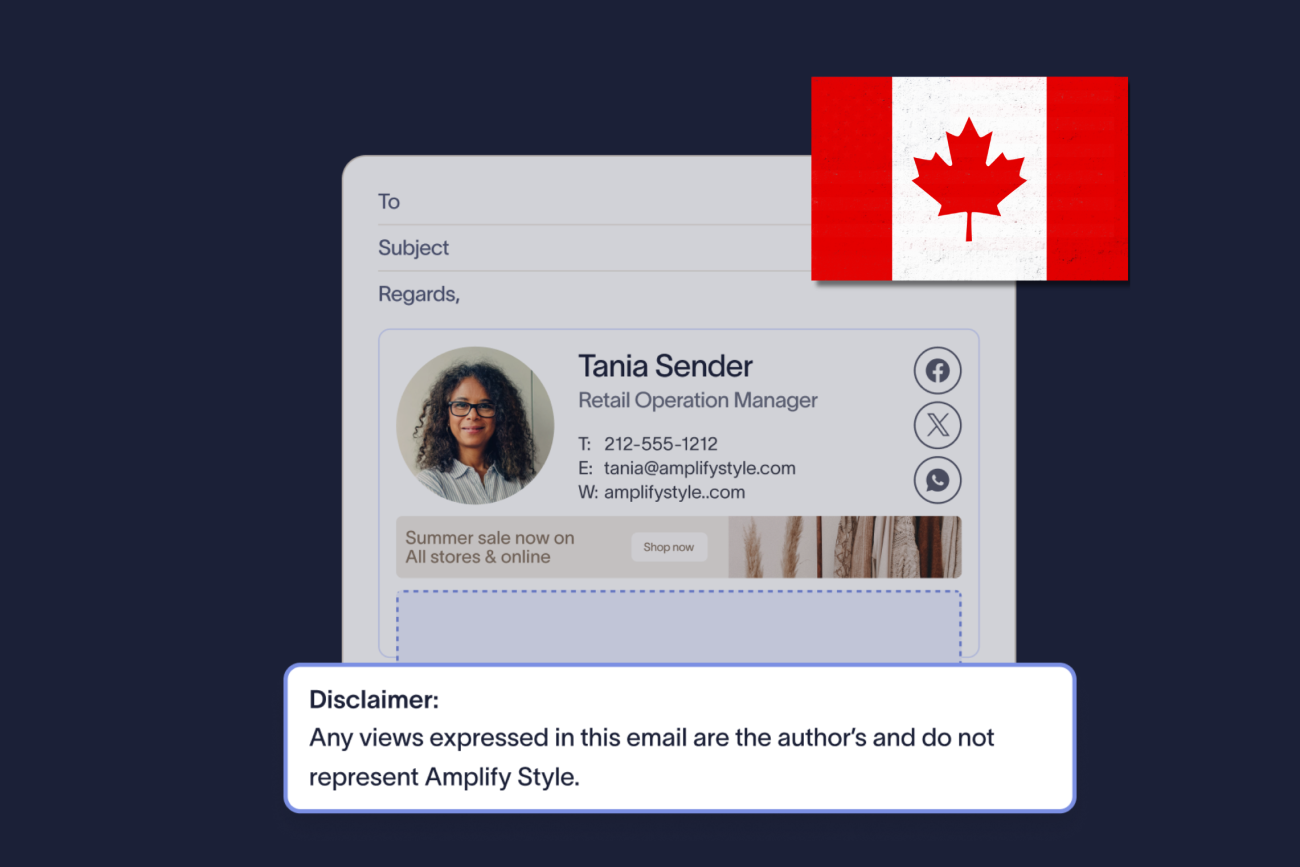
- Exclaimer centralizes disclaimers so organizations can apply the right version—English, French, or province-specific—without relying on employees to manage their own settings.
Email is a core communication tool for organizations across Canada, especially when handling customer information, internal updates, or sensitive data. Because of this, many businesses include an email disclaimer to support clear communication, reduce risk, and align with expectations set by Canadian privacy and data protection standards.
Canada does not have a single law that requires a generic email disclaimer. Instead, national legislation like PIPEDA, and several provincial privacy acts, shape how organizations handle personal information and communicate with individuals. These laws focus on transparency and responsible data practices, which often leads businesses to use disclaimers to reinforce how certain information should be treated.
This guide outlines how email disclaimers are used in Canada, the laws that influence them, and what organizations should consider when creating a consistent approach across teams and regions.
Are email disclaimers legally required in Canada?
No. Canada does not have a federal or provincial law that requires organizations to include a standard email disclaimer. However, several privacy and electronic communication laws like PIPEDA set expectations for how personal information is handled and how organizations communicate with individuals.
Email disclaimers are commonly used across Canada because they help reinforce confidentiality, clarify handling expectations, and support internal governance. They also help organizations stay consistent when communicating across provinces with different privacy frameworks. While these notices do not create legal compliance, they provide structure and help ensure that sensitive or personal information is treated appropriately.
In practice, Canadian organizations use email disclaimers to reduce risk, support transparency, and maintain a predictable communication standard.
When Canadian organizations use email disclaimers
Organizations across Canada use email disclaimers to support clear communication and reduce the risk associated with handling personal or sensitive information. While disclaimers are not legally required, they are a practical way for teams to stay consistent across departments, regions, and communication channels.
Common reasons Canadian organizations use email disclaimers include:
1. Supporting privacy expectations under PIPEDA and provincial laws
Canada’s privacy framework emphasizes accuracy, transparency, and responsible data handling. Disclaimers help reinforce these expectations by reminding recipients that the email may contain personal information and should be handled carefully.
2. Managing confidentiality across internal and external communications
Businesses often share internal updates, financial information, or sensitive material by email. Disclaimers help clarify that the message is intended only for the named recipient and should not be forwarded without permission.
3. Reducing the risk of misdirected emails
Accidental sends happen frequently. A simple instruction to delete the message and notify the sender helps organizations manage these situations more responsibly.
4. Operating across multiple provinces with different privacy rules
Canada’s privacy landscape varies by region. National organizations use disclaimers to keep communication consistent across provinces such as Quebec, Alberta, and British Columbia, where private-sector privacy laws differ.
5. Communicating with clients and the public
Disclaimers add clarity when sending information externally, especially when the content may include personal data, financial details, or internal documentation.
6. Supporting bilingual or multilingual communication
Many Canadian organizations communicate in both English and French. A standardized disclaimer helps keep messaging clear and consistent across languages.
While disclaimers do not replace legal or compliance requirements, they help organizations maintain predictable, structured communication across Canada’s diverse regulatory and linguistic environment.
Canadian laws that influence the use of email disclaimers
Canada does not mandate the use of email disclaimers. However, several federal and provincial laws shape how organizations handle personal information, communicate with individuals, and manage sensitive data.
Personal Information Protection and Electronic Documents Act (PIPEDA)
PIPEDA doesn't require email disclaimers. However, many organizations use them to remind recipients that a message may contain personal data and should be handled with care. This aligns with PIPEDA’s emphasis on safeguarding personal information and ensuring transparency.PIPEDA is Canada’s federal private-sector privacy law. It sets the rules for how organizations collect, use, and disclose personal information during commercial activities.
PIPEDA email disclaimer (example)
This email may contain personal or confidential information. If you are not the intended recipient, please delete the message and notify the sender. Do not share or distribute its contents without permission.
Useful resources:
- PIPEDA guidance from the Office of the Privacy Commissioner
- Government of Canada Privacy Act overview
Canada’s Anti-Spam Legislation (CASL)
Canada’s Anti-Spam Legislation (CASL) governs commercial electronic messages (CEMs) in Canada. It requires organizations to include identification details and an unsubscribe mechanism in marketing emails.
Many businesses use disclaimers to clarify the nature of the communication, reinforce proper handling, and provide structure alongside CASL-required identification and unsubscribe information.
A CASL-compliant email disclaimer typically includes:
The sender’s name
The company name
A physical mailing address
A phone number
An online contact method (email or website)
An unsubscribe link (opt-out requests must be honored within 10 days)
CASL email disclaimer (example)
This email was sent by [Organization Name]. If you received it in error, please delete it and notify the sender. To manage your communication preferences, please use the link below.
Useful resources:
- Canadian Anti-Spam Legislation (full text)
Managing the message: Canada’s new anti-spam law sets a high bar
Provincial privacy laws (Alberta, British Columbia, Quebec)
Several Canadian provinces operate their own private-sector privacy laws, including:
Alberta and British Columbia: Personal Information Protection Act (PIPA)
Quebec: Act Respecting the Protection of Personal Information in the Private Sector (Law 25 modernizations)
Provincial privacy disclaimer (example)
This email may include personal or sensitive information. If you are not the intended recipient, please delete it and advise the sender. Do not copy or distribute its contents without authorization.
Useful resources:
- Office of the Information and Privacy Commissioner for Alberta
- OIPC British Columbia
- Quebec Commission d’accès à l’information
Public-sector and government transparency laws
Public bodies in Canada are subject to federal and provincial freedom-of-information frameworks, such as the Access to Information Act and provincial FOI legislation. Email sent by public officials may be subject to disclosure if it meets the criteria for a request.
These laws do not require disclaimers. However, government organizations often use them to clarify that an email may contain sensitive information or be subject to public access under the law.FOI email disclaimer (example)
This email may contain information that could be subject to disclosure under applicable access-to-information laws. If you are not the intended recipient, please delete the message and notify the sender.
Useful resources:
How Exclaimer helps companies meet Canadian email disclaimer requirements
Canadian organizations often operate across multiple provinces, each with its own privacy expectations and communication standards. Managing consistent disclaimers can become difficult when individual employees control their own settings.
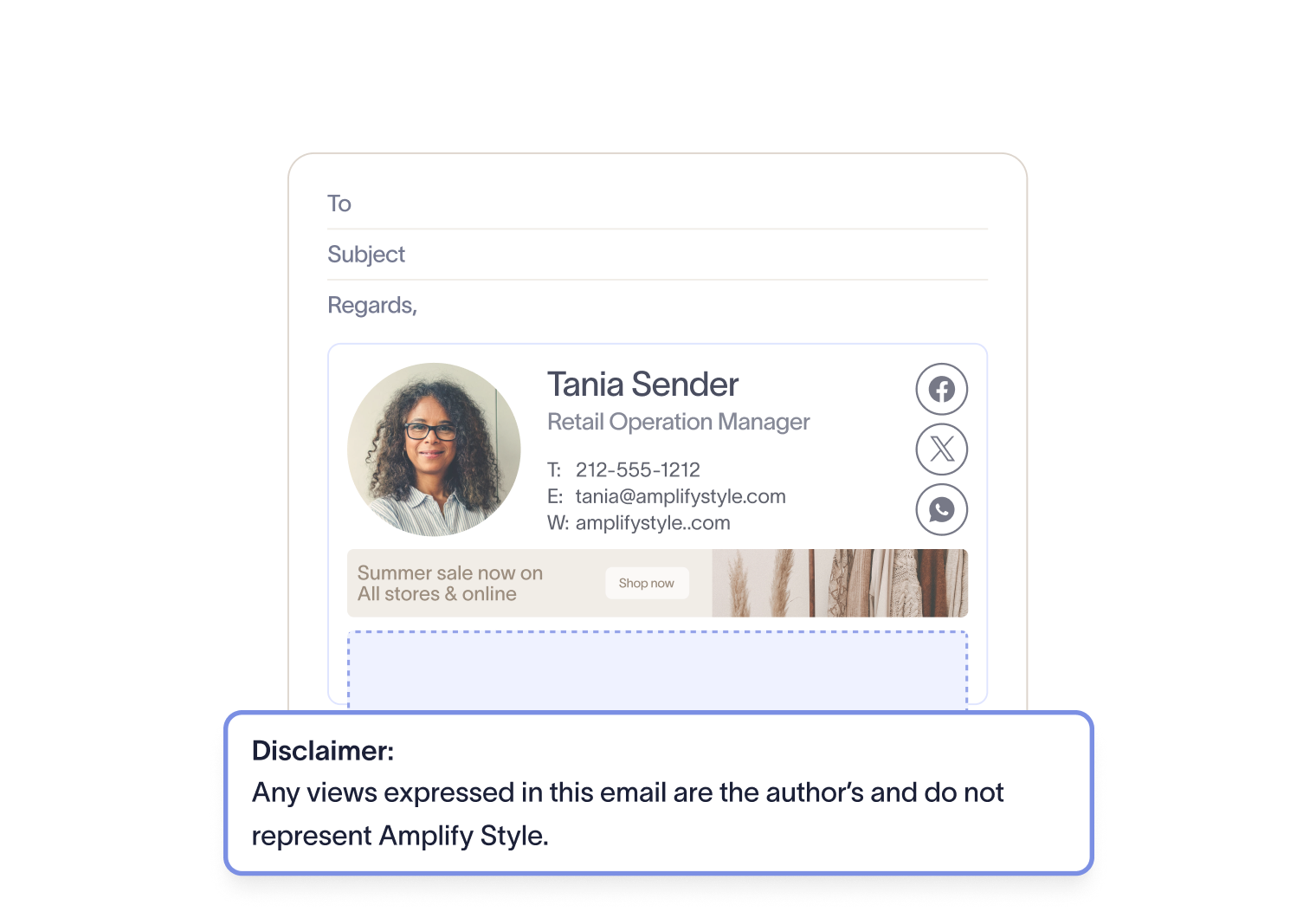 Exclaimer centralizes this process so organizations can apply the correct disclaimer, company information, and bilingual versions across all users automatically.
With Exclaimer, you can:
1. Standardize disclaimers across provinces
Canadian privacy rules differ between federal PIPEDA and provincial laws in Alberta, British Columbia, and Quebec. Exclaimer lets you create tailored versions of your disclaimer and automatically assign them to the right users or departments.
2. Manage bilingual communication at scale
Many Canadian organizations communicate in both English and French. Exclaimer makes it easy to create and maintain bilingual disclaimers so recipients always receive clear and appropriate information.
3. Keep company information accurate and up to date
If your organization changes its registered address, legal name, or policy references, Exclaimer updates this information instantly across every user, which removes the need for manual edits.
4. Maintain governance for sensitive or personal data
Even though disclaimers don’t create compliance under PIPEDA or provincial laws, they help reinforce internal standards for handling personal information. Exclaimer ensures those messages stay consistent.
5. Reduce errors and inconsistencies
By replacing employee-managed signatures and disclaimers with centralized control, Exclaimer prevents outdated text, missing information, or inconsistent formatting from appearing in outbound email.
Find out how Exclaimer can support your legal compliance and start a free trial today.