



The hidden compliance risks in your manufacturing email communications
16 May 2025
0 min read
Your inbox is quiet. Then legal forwards a flagged email from a recent export audit. A disclosure is missing. The sender is in procurement. The formatting was handled by a third-party tool. Now it’s on you to figure out what happened and make sure it doesn’t happen again.
This is common for IT teams in manufacturing. You own the infrastructure, but not the message. Disclaimers vary. Templates drift. Job titles are out of sync. When regulators or auditors want answers, it’s IT that gets the call.
The problem isn’t always in the systems. It shows up in emails. A missing line, an outdated reference, a broken chain of custody. It’s hard to prove compliance when communication leaves no reliable trace.
This article explains how unmanaged outbound emails create compliance gaps. It also shows why IT professionals in manufacturing often find themselves solving problems they didn’t cause.
Why manufacturers need to tighten email communications
As manufacturers scale operations and enter new markets, their compliance obligations grow more complex. From export restrictions to quality certifications and data handling laws, every interaction is subject to scrutiny.
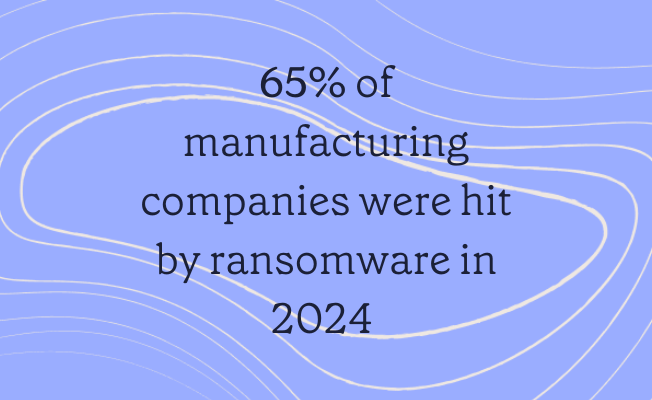
In 2024, 65% of manufacturing companies reported ransomware attacks. At the same time, many failed basic compliance reviews due to missing or incorrect information in routine communications. Most of the time, it’s not a system failure. It’s someone sending the wrong message, and IT is expected to explain it with no insight into what went out. Email may seem like a basic utility, but regulators now view it as part of your compliance infrastructure.
When email signatures vary between teams, omit key disclosures, or show outdated roles or certifications, the consequences stack up. You lose control of what’s being sent, struggle to demonstrate compliance, and risk errors that invite fines or scrutiny.
Key regulations impacting the manufacturing industry
Manufacturing businesses must adhere to strict regulations, including data protection, health and safety, and ISO standards. Without compliant email signatures, they risk leaving out legally required information, which can lead to regulatory breaches.

Including compliant regulatory details in email signatures helps manufacturers meet legal requirements, avoid enforcement actions, and maintain client trust.
Click the arrows to explore how these regulations connect to your email signatures:
1. ISO 9001 and Quality Management Standards – Global
Why it matters: Requires manufacturers to follow strict documentation and quality protocols—including email communication—for auditability and regulatory alignment.
Email signature connection: Reinforces commitment to quality standards and provides traceable documentation during audits or certifications.
2. International Traffic in Arms Regulations (ITAR) – U.S.
Why it matters: Governs export controls on defense-related technical data. Email is considered a transmission medium subject to these controls.
Email signature connection: Disclaimers help prevent unauthorized disclosure and demonstrate compliance with export laws, reducing liability.
3. California Consumer Privacy Act (CCPA) – U.S.
Why it matters: Requires transparent communication of how personal data is collected, shared, and protected for California residents.
Email signature connection: Adding a data privacy disclaimer builds trust and supports proactive privacy enforcement.
4. General Data Protection Regulation (GDPR) – EU
Why it matters: Requires transparent, secure handling of personal data and holds businesses accountable for privacy violations.
Email signature connection: Disclaimers reinforce lawful data handling practices and clarify data subject rights.
5. OSHA (Occupational Safety and Health Administration) – U.S.
Why it matters: Promotes workplace safety and mandates clear communication of safety practices and responsibilities.
Email signature connection: Supports culture of compliance by signaling safety standards and accountability to external stakeholders.
6. Cybersecurity Maturity Model Certification (CMMC) – U.S.
Why it matters: Required for manufacturers that handle controlled unclassified information (CUI) in DoD supply chains.
Email signature connection: Helps enforce information flow control, supports audit readiness, and demonstrates secure communication practices.
7. Customs and Trade Compliance – U.S./UK/EU
Why it matters: Manufacturers involved in exporting or importing controlled goods must meet documentation and communication standards.
Email signature connection: Disclaimers serve as proof of export control compliance and reduce the risk of customs violations.
8. HIPAA (Health Insurance Portability and Accountability Act) – U.S.
Why it matters: Applies to manufacturers handling PHI (Protected Health Information) in medical device or healthcare-related operations.
Email signature connection: Disclaimers warn recipients of potential PHI exposure and reinforce data handling policies.
9. Environmental and ESG Reporting – Global
Why it matters: ESG-related regulations and voluntary disclosures (e.g. Scope 3, EU CBAM) require accuracy and transparency in sustainability reporting.
Email signature connection: Clarifies that shared environmental data is confidential, pre-audited, or intended for reporting purposes only.
10. Sarbanes-Oxley Act (SOX) – U.S.
Why it matters: Requires public companies to maintain internal control over communications for transparency and fraud prevention.
Email signature connection: Signatures with compliance text and legal disclaimers support defensible recordkeeping and governance.
The risks of mismanaged email signatures
When email signatures are mismanaged, they create significant risks for manufacturing companies.
From financial penalties and legal disputes to reputational damage and brand risks, let’s examine the consequences of failing to secure email signatures.
Financial risks:
ISO and ITAR violations can lead to lost certifications or million-dollar fines.
OSHA violations can trigger per-incident penalties up to $15,000+.
GDPR and CCPA breaches carry global financial exposure.
Legal risks:
Job title errors or missing safety warnings may result in contractual disputes or liability claims.
Inconsistent email disclaimers reduce defensibility in export control audits.
Brand and trust erosion:
Disjointed or unprofessional signatures undermine credibility with vendors, regulators, and customers.
Clients may perceive a lack of control or maturity.
Operational inefficiencies:
IT teams waste hours on manual email signature updates, often during critical compliance deadlines. The issue isn’t how many changes are needed. It’s when they show up—usually during an audit, after something breaks, or when it’s too late to fix cleanly.
Marketing and compliance lose visibility and governance over what’s being sent externally.
Real-world example: Orion’s $60 million loss
In August 2024, a global chemical manufacturer, Orion, approved a series of fraudulent wire transfers after a business email compromise. An attacker impersonated a senior executive using email. The request was approved without verification. This led to the company suffering a $60 million loss.
One of the contributing factors was the inconsistent use of email signatures across teams. The organization had no standard format or policy enforcement. When every team handles email signatures differently, IT has no way to control the message. That kind of inconsistency makes it easier for threats to slip through.
This incident wasn't limited to a cybersecurity failure. It also reflected a lack of governance over outbound communication. Without consistency or control, email signatures can create blind spots that affect risk visibility and response.
How centralized email signature management protects manufacturing companies
Managing email signatures manually in a manufacturing company is time-consuming and can lead to legal, safety and compliance issues.

Using a centralized email signature management platform simplifies the process, ensuring professionalism, security, and compliance with less effort.
Here’s how email signature management helps manufacturing companies:
Automated compliance: Regulatory disclaimers, liability statements, and privacy notices are automatically added to every email.
Prevents contract and legal disputes: Set clear expectations about the content and intent of emails using disclaimers, preventing legal ambiguity.
Enhanced security and fraud prevention: No more unauthorized email signature modifications, meaning the risk of off brand, outdated or insecure information is reduced.
Improved operational efficiency: Maintain efficiency, accuracy, and compliance with minimal effort despite multiple locations, suppliers, and regulatory requirements.
Stronger brand trust: Consistent and professional email signatures enhance credibility, build customer trust, and reflect a trustworthy brand image.
Is your email signature setup audit-ready?
To avoid surprises during an inspection or breach investigation, ask yourself:
Are legal and regulatory notices applied consistently across all users and sites?
Do email signatures reflect the correct compliance contact, certification, or export warning?
Can changes be audited or verified centrally?
Are non-compliant formats blocked automatically?
If you can’t answer yes to all of the above, you’re likely facing a gap in your compliance controls. IT knows the rules. The challenge is enforcing them across departments, regions, and third-party tools—without turning every update into a manual job.
We’ve built a self-assessment checklist specifically for IT and compliance leaders in manufacturing. It helps you benchmark your signature management strategy against current regulatory demands—from ITAR and ISO to GDPR, OSHA, and CMMC.
👉 Download the Email Compliance Checklist