




5 reasons why email is still a powerful business tool
4 August 2025
0 min read
TL;DR
- Email remains the most widely used and trusted channel for formal business communication
- It offers unique benefits—universal access, speed, cost-efficiency, and auditability
- Despite new tools like Slack or Zoom, email is still the default for high-stakes, professional interactions
- You can make email work even harder with dynamic, branded, and compliant email signatures
Email remains one of the most important and effective communication tools in business. Despite the rise of messaging apps and collaboration platforms, email continues to dominate professional communication.
It requires fewer resources than traditional methods like physical mail or telephone, and it delivers broader reach, greater traceability, and stronger return on investment.
In this article, we explore the importance of email and the top advantages of using email in business today.
Want the full picture? Download the State of Business Email 2025 report to learn how IT leaders are managing compliance, consistency, and risk at scale.
Get your copy5 reasons why email is a necessary part of the modern workspace
1. Wide reach
Email's reach is unmatched in business communication.
Universal access: Nearly every professional has an email address, making it a baseline tool for communication across industries.
Platform compatibility: Email works across providers, devices, and networks without compatibility issues.
From small businesses staying connected with customers to global corporations. Working within teams spread across multiple countries, email is an invaluable tool that allows messages to be sent quickly and easily around the world.
Not only does email have a wide reach, but it also eliminates data limitations or compatibility issues. This allows both parties to receive and share important information easily. It’s no wonder businesses still rely on email to remain efficient and successful.

Email is business-critical
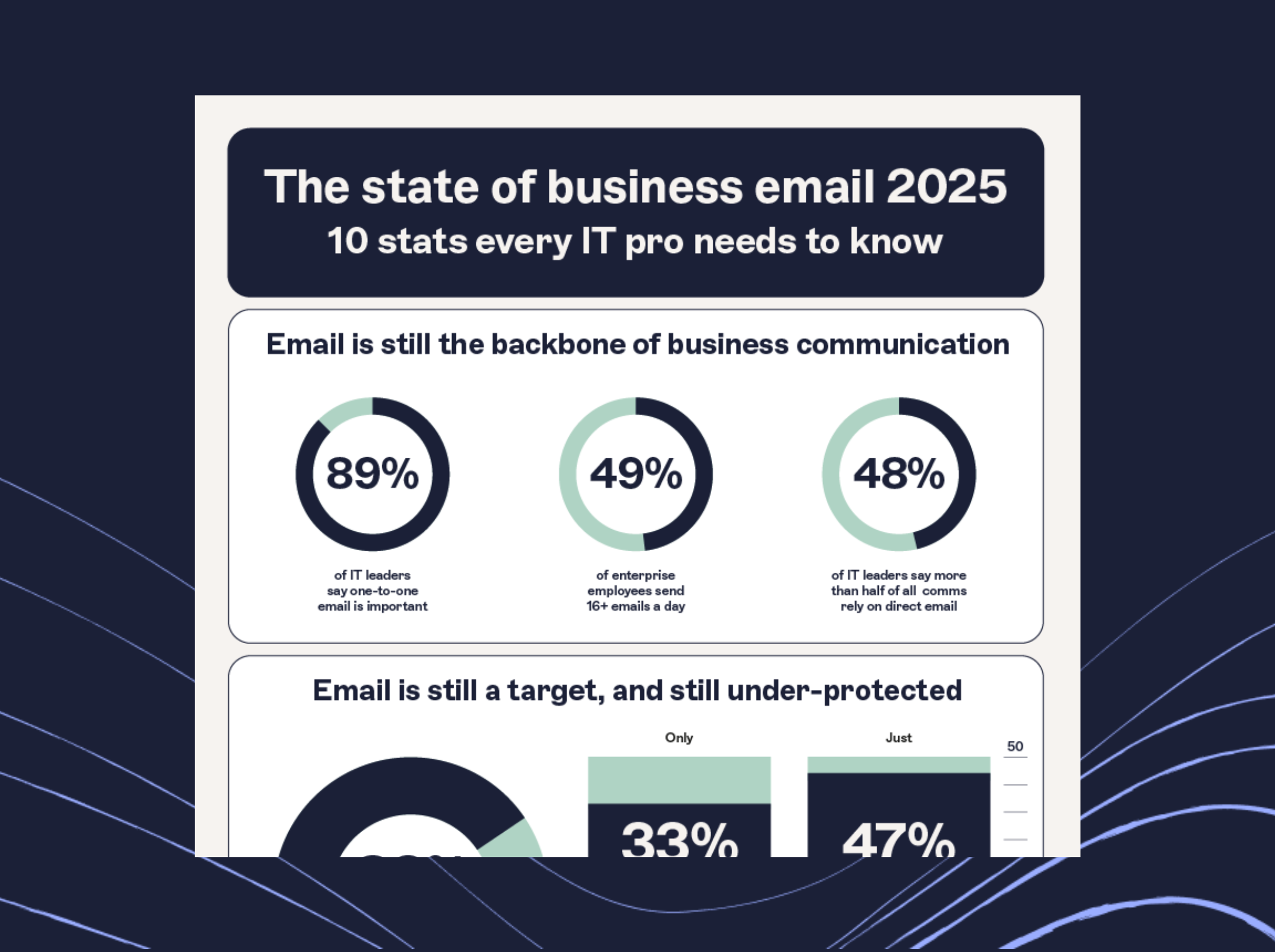
89% of IT leaders rank one-to-one email as critical to business operations—surpassing collaboration tools and instant messaging.
Source: State of Business Email 2025
2. Fast and asynchronous communication
Email provides an efficient way of sending messages, both internally and externally, allowing real-time feedback and conversations at any given time.
In fact, email revolutionized the way we communicate with each other. That’s a core advantage over messaging and video tools. It’s immediate, but flexible.
You can send messages, share updates, and get feedback in near real-time.
You eliminate delays caused by post or phone tag.
Whether it’s a customer inquiry or a vendor request, email helps businesses respond quickly while leaving a documented trail.
3. Cost-effective and scalable
Sending an email costs nothing. Managing thousands costs very little.
Compared to other business tools like collaboration platforms or calling software, email remains one of the most cost-efficient channels. You can broadcast messages at scale—newsletters, compliance updates, onboarding instructions—without extra investment.
Yes, other tools have their place. But when weighing the benefits of an email against its costs, it remains the clear winner for routine, repeatable, and regulated communications.
4. Familiarity and ease of use
Most employees already know how to use email. That makes onboarding easier and training costs lower.
By embracing email and taking advantage of its capabilities, companies can onboard new employees with relative ease while cutting down on the manpower needed for communication tasks.
Therefore, it should come as no surprise that many businesses actively use email as an effective way of staying connected.
5. Security and compliance readiness
Email isn’t just fast and cheap—it’s also secure.
As the world of cyber security continues to evolve, email remains one of the most reliably secure platforms for communicating information. Industry-standard protocols such as TLS (Transport Layer Security), and strict protocols help to prevent unauthorized access to data that has been sent or stored via email.
This level of protection makes email one of the most trusted channels for regulated industries and formal communication.
Email is undoubtedly an important asset for companies looking to establish and maintain secure communications between customers and business partners.

High-stakes communication lives in email
49% of IT leaders say email is their primary tool for critical messages like client communication, security alerts, and formal policy updates.
Source: State of Business Email 2025
Where does email fit in modern communications?
Email remains a cornerstone of business communication, but its role has evolved with the rise of collaboration tools and messaging platforms like Slack and WhatsApp.
Each channel has its strengths, and effective communication strategies often involve leveraging all of them in complementary ways based on the context and requirements of the interaction.
Effective business communication often involves using a combination of these tools to address multiple needs, from formal communication and project management to real-time collaboration and remote work.
Here’s how email fits into the modern business communication landscape alongside these newer channels:
1. Formal communication and email
Email is the preferred choice for:
Contracts, statements, and audit communications
Client updates and business-critical memos
External messaging that requires traceability
The strengths of email lie in its professionalism, thorough documentation, and universal use, making it a valuable tool for various communication needs.

When it matters, it’s sent by email
48% of organizations rely on email for more than half of all internal and external communication—especially for client updates, policy changes, and security alerts.
Source: State of Business Email 2025
2. Instant messaging and collaboration tools
When thinking about collaboration and instant messaging tools, Slack, Microsoft Teams, WhatsApp, and Workplace by Facebook all come to mind.
The benefits of tools like these include real-time messaging, project management, video conferencing, quick updates, informal communication, internal communication and community building. Each of these tools has its strengths, catering to various needs in team interactions and productivity.
But they:
Don’t always reach external users
Lack robust audit trails
Can’t guarantee delivery or formatting consistency
Email complements these tools by covering the gaps: structure, security, and searchability.
3. Video conferencing and virtual meetings
Video conferencing has become a vital tool for remote collaboration, offering benefits like real-time communication and enhanced team connectivity.
However, it's important to acknowledge that video content isn't always documented or searchable. Unlike email, videos can be more difficult to find and access.
Furthermore, not all videos are transcribed or captioned, which can make it challenging for individuals with hearing impairments or non-native speakers to fully engage with the content. It also lacks the asynchronous nature of email communication, which allows for more flexibility in response times.
Popular video conferencing tools include Zoom, Microsoft Teams, and Google Workspace (Google Meet).
Each channel has its specific strengths and is suited for different aspects of business communication, making them complementary tools to email in a modern business environment.

Email is still the backbone
While 89% of IT leaders agree that video conferencing is important, email remains the most universally used channel—delivering consistent communication across teams, industries, and geographies.
Source: State of Business Email 2025
Unlocking the true potential of your business emails
Email’s role in business is far from over. In fact, it’s growing in importance as companies need:
Better documentation
Cross-device consistency
Scalable communication
Built-in compliance
But business email can do so much more than just communicate.
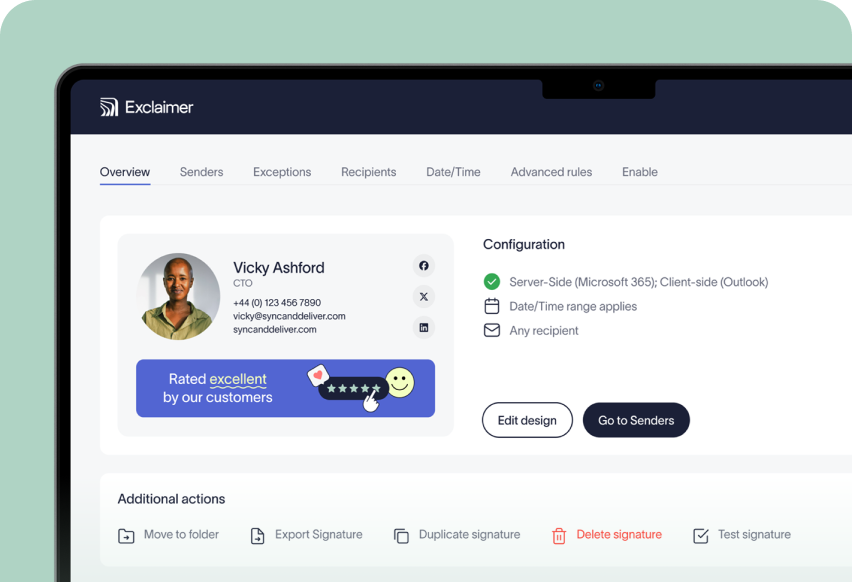
It's a powerful marketing channel that’s highly targeted and always provides great ROI. By effectively incorporating email signatures into business email, you turn every message sent into a personalized engagement platform. And one that comes complete with the same benefits highlighted in this article.

See it in action
Discover how Exclaimer transforms every email into a professional, secure, and marketing-ready communication.
Book a free demo